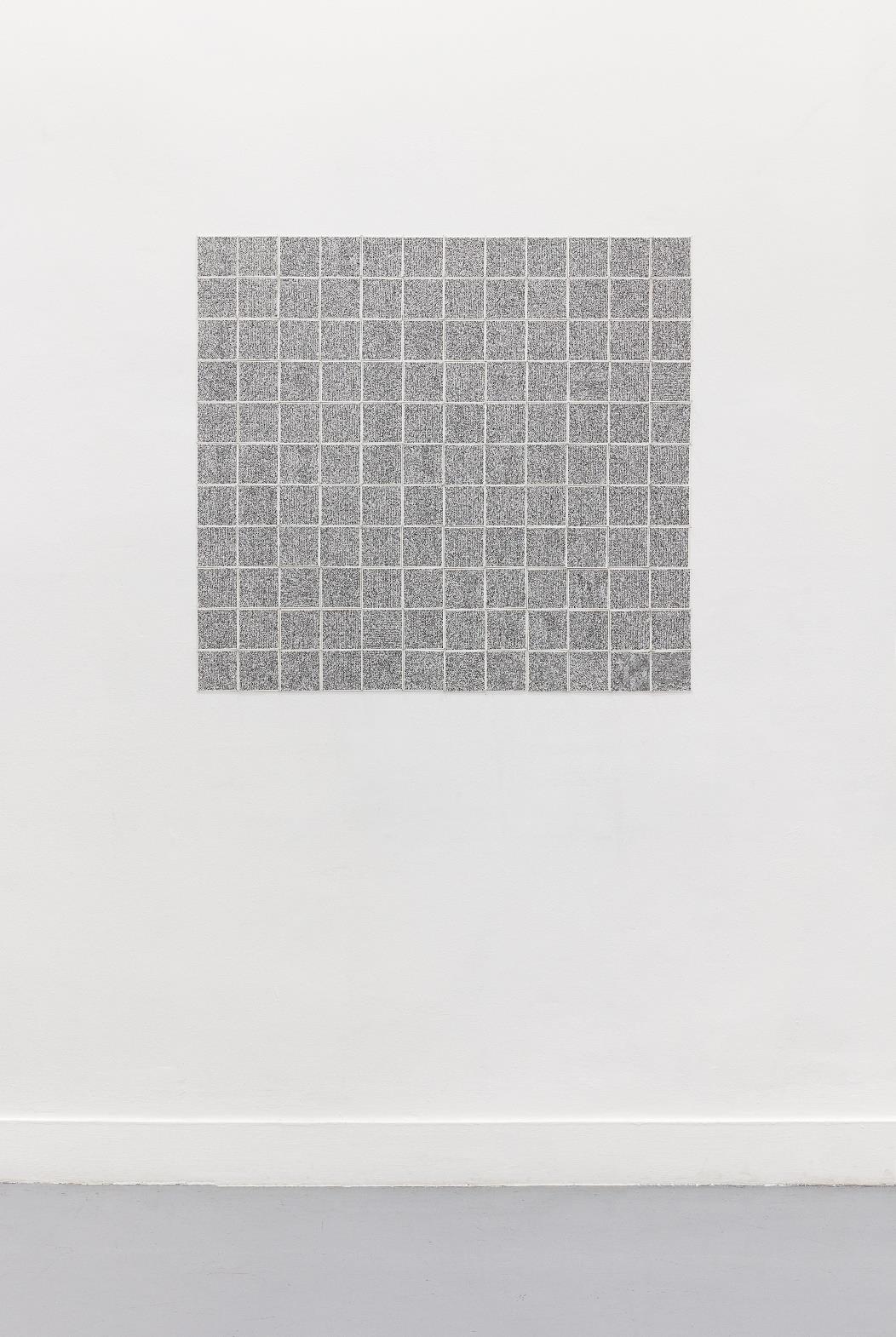
I will always think of you fondly. (with Tewprai Bualoi)
A research project in collaboration with Tewprai Bualoi exploring what forms a video file could inhabit. Together we manifested a digital object — a video file — into physical form without altering its original code, so that anyone who interacted with the piece could transform the physical object back into the original video file. That exploration of digital/physical alteration continues in Tewprai's practice since.
My role was the programmer: building the tools that moved the file between states, and the application that could scan and reassemble it back into video.
The project began when a dead laptop hard drive came back from data recovery on a brand-new replacement disk — the original rendered a carcass, its data intact elsewhere. That feeling of mourning a dead drive became the piece's starting point: the original HDD, dissected and presented as an anatomical study.
The first experiment: opening a video file in plain text, saving all ~14 million characters as a .txt, then renaming the extension back to .mp4 — recovering the original file intact, as long as none of the text was touched. That became the project's method. We printed as much of it as we could — the longest paper available covered only one eighth of the total text.
From there we looked for a way to make the physical form shorter without damaging the original file, testing materials that could outlast paper.
Finally, we encoded the file as a base64 string and split it into 132 QR codes — small enough to print, complete enough to scan back into the original video. I built the application that collects and joins each scanned code in sequence and reconstructs the file.
The final piece pushes the material furthest: one QR code carved into marble, a medium that has carried inscriptions for thousands of years — the same file, given the site's oldest surviving format for permanence.
First shown in EARLY YEARS PROJECT #4: PRAXIS MAKES PERFECT at BACC, the piece was revisited for Speedy Grandma Centennial (2020), presenting its full background — physical, published source code, and the originally-intended (but unrealized) online/virtual form — across physical, print, and web. Full documentation on tewprai.com.