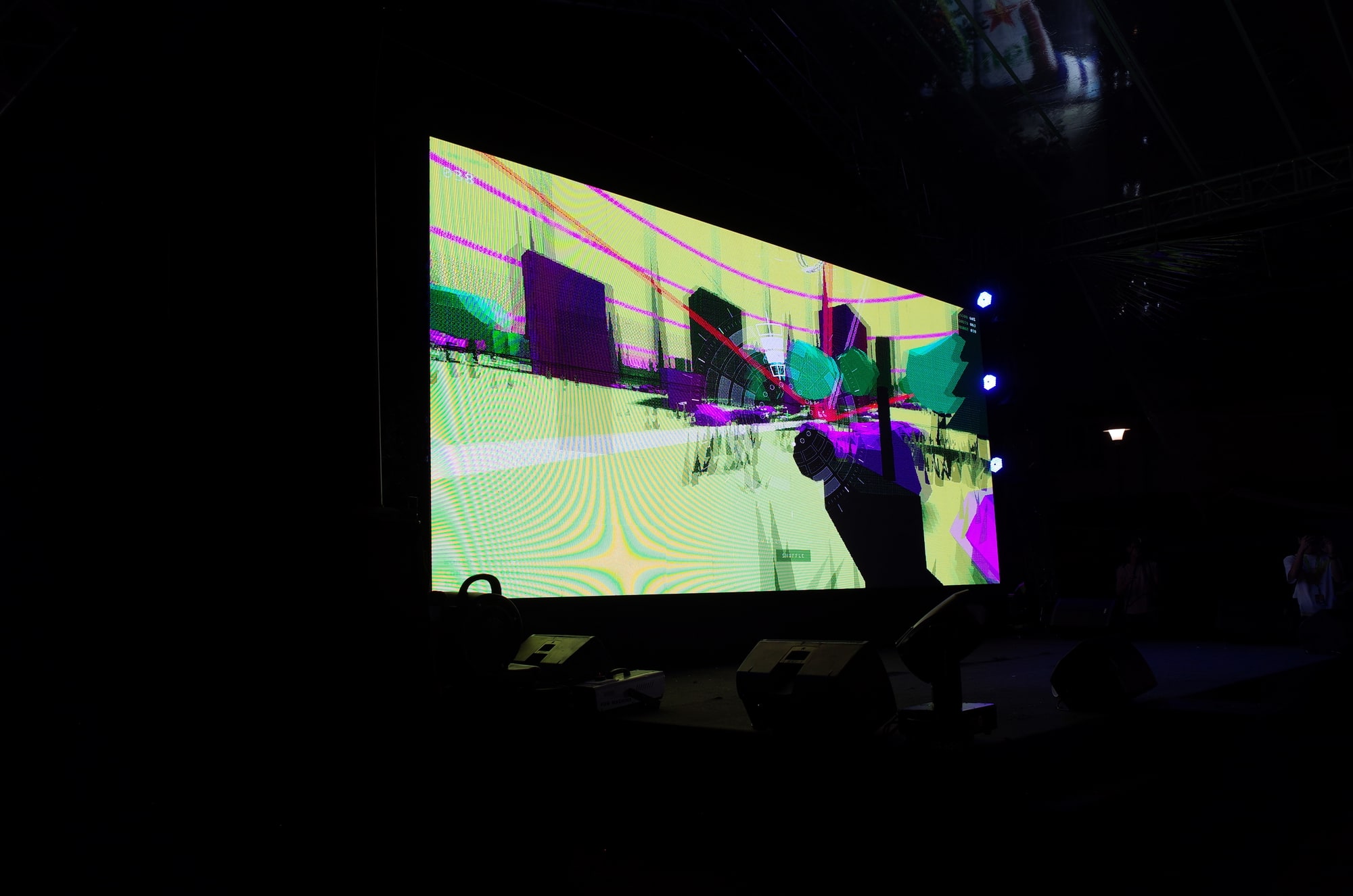
Business As Usual: The Abstraction of violence
When something is abstracted, we tend to see it as less human, even when the data underneath is a person. A drone operation is the plainest example: the person becomes a shape on a screen, and killing becomes easier.
We have been trained on these images for a long time. Harun Farocki called them operational images: pictures that are not made to show something but to be part of an operation.1 We got used to them through the news, and then through games. The second scene of this set, the aerial view, comes from Call of Duty 4: Modern Warfare, where the player looks down from a gunship through a thermal camera. Some researchers argue that the series was made with the support of the U.S. military, and read it as a psychological operation.2
At some point the separation gets so wide that we cannot tell the difference anymore. In Ender's Game the protagonist believes he is playing a simulation, and has no idea what he is actually doing.3
Lately the killing is automated as well, so we don't even have to deal with it. Business as usual. What is left is only a task, and a task can be automated, and it has to be finished whether or not it hurts a real human.
I wanted to deliberately destroy this system, so I made a desktop destroyer to end the set.
1Harun Farocki, Eye/Machine I–III (2000–03) and Serious Games I–IV (2009–10). See Harun Farocki: Images of War (at a Distance), MoMA.
2Alan MacLeod, “Call of Duty is a Government Psyop: These Documents Prove It”, MintPress News, 18 November 2022, based on documents obtained by Tom Secker under the Freedom of Information Act. The documents show collaboration between the military and the producers; “psyop” is the author's reading. The aerial mission is “Death From Above” (Infinity Ward, 2007).
3Orson Scott Card, Ender's Game (1985).